
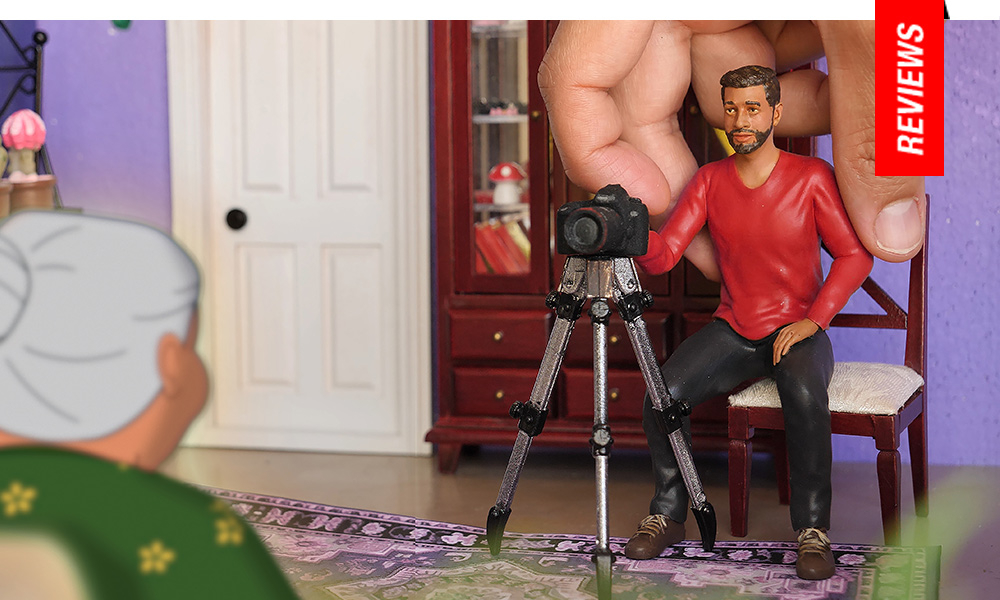
Frames That Mend: Caballero Unevenly Probes Puerto Rican Family Grief
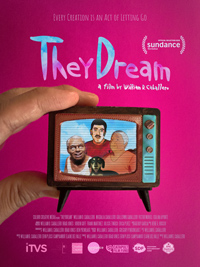

A long-gestating project that is littered with often funny and insightful people, members of Caballero’s Puerto-Rican immigrant clan have been living in the same trailer since he was born, however it is just Milly who remains. Scaling back in time with footage and interviews with interview subjects of his father and two grandparents, whose absences are felt at different points throughout the film, Caballero uses motion capture animation to essentially become his father, a caring but complicated man who eventually died of kidney failure. Later on there is a discussion about his homosexuality (coming out was not an option when his father was alive) that highlights the division of both generations and culture with Caballero having grown up in America as opposed to Puerto Rico. These musings are hefty but are a mere footnote in the film. There isn’t much milage to ruminate on each point, to unpack the emotional text before abruptly moving onto the next. Unfolding as if it’s being assembled in real time, often revealing the animation process itself or drifting into dreamlike sequences that reconstruct conversations and memories through sound and image.
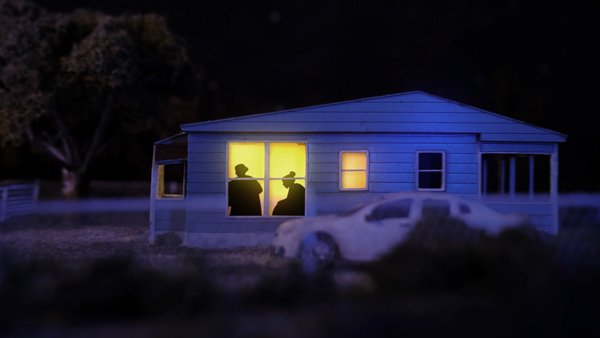

Caballero gets his mother Milly to re-enact often painful answering machine messages from his grandmother at the end of her life and when the focus is on Milly’s reaction you feel the years of self-immolation this has had on her spirit. Milly is the heart of the film and despite genuinely emotional moments there are strange choices of over-sentimentality, especially a soaringly saccharine score from René G. Boscio that signposts sadness like a giant flashing billboard. The emotional lifting is so evident through Caballero’s moving subject that there shouldn’t have been any need for the more obvious choices he relies on. Portions of the stop motion found in his 2016 hybrid short Victor & Isolina are included here to chronicle his bickering grandparents and the evolution of their once active minds to that end of life slump. There’s certainly the entire spectrum of human life here but again, the connective tissue seems a little lost.
The animation itself looks mostly great with the motion capture probably being the docu’s more alluring visual element. A sequence of his young father pretending to be certain animals to make a four year-old William laugh is smartly manipulated so Caballero both becomes his father and the animals he imitates. “Creativity became the place where I learned to survive, to process pain and to understand my family,” which is a valiant message from an underrepresented brand of queer filmmaker. Occasionally soaring with invention, and some cute diversions, the uneven mix includes gorgeous hand crafted sets and there’s an endearing and accomplished execution to his passion. With his unique blend of documentary storytelling and wildly competing themes, TheyDream equates to that first flawed attempt from a new voice you want to keep tabs on.
Reviewed on January 25th – 2026 Sundance Film Festival (41st edition) – NEXT section. 91 mins.
★★½/☆☆☆☆☆