
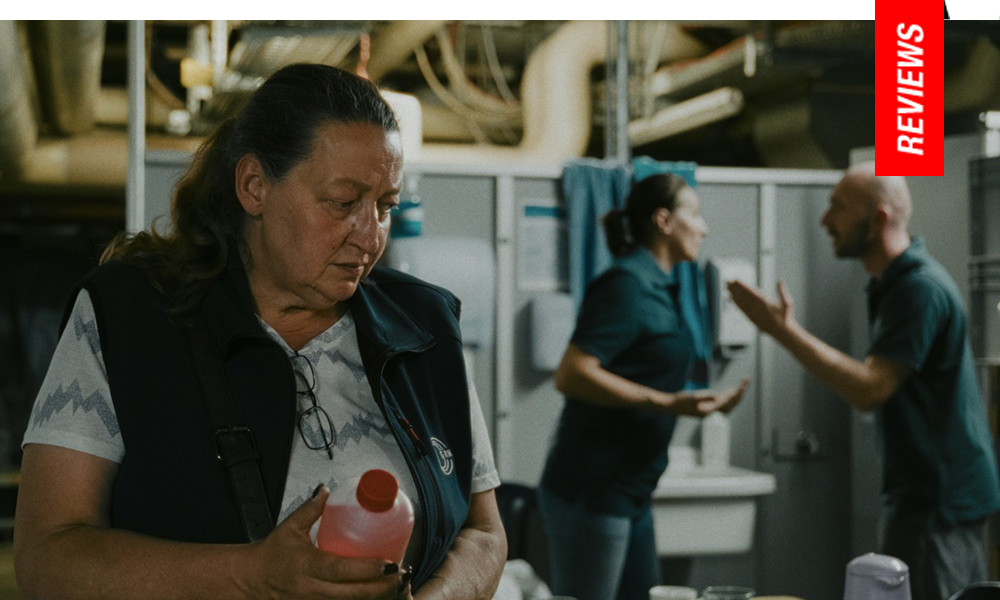
In the Realm of Defenses: Friedrich Examines Turmoils of the Working Class


Heike (Sabine Thalau) works as a customer service manager for a cleaning company, charged with keeping staff on track with stringent deadlines, often interrupted by ornery clients who feel their contract isn’t always fully satisfied thanks to a constant bare bones crew. However, Heike, on the verge of turning sixty, has exacerbated an already tenuous balance because she tried to recruit an employee from one of her company’s subcontractors, and the ripple effects have proven to be significant as now she’s opened herself up to meeting additional demands producing more greater results or else the subcontractor will cut ties. Forced to make an impossible decision which would require her to cut one of her staff members, Heike makes a poor decision by trying to fire a struggling single father after making it seem as if he was stealing. The fall out is significant as the employee was a fellow countryman and confidante of her Bosnian friend and co-worker, Taja (Nada Kosturin). As the situation spins out of control, Heike resurrects her dream of creating her own cleaning company, but has she burned too many bridges amongst her colleagues?
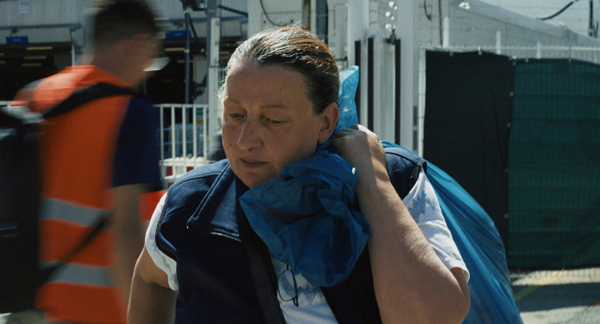

The French have long cornered the market on formidable examinations of working class woes, and the cruelty shouldered by the blue collar masses seems to have increased, at least if gauged by the growing number of cinematic examples delving into harrowing realities. Many of these are from the perspective of characters who are merely dipping their toes into the roiling hustle of survival, such as the investigative journalist portrayed by Juliette Binoche in Emmanuel Carrere’s Between Two Worlds (2021) or Bastien Bouillon’s poverty tourist from Valerie Donzelli recent At Work (2025). But the distress of Heike feels equivalent to the travails of Laure Calamy in the pulsating Full Time (2021), a woman on the verge of extricating herself from the rat race only to find herself caught even more precariously in he mire.
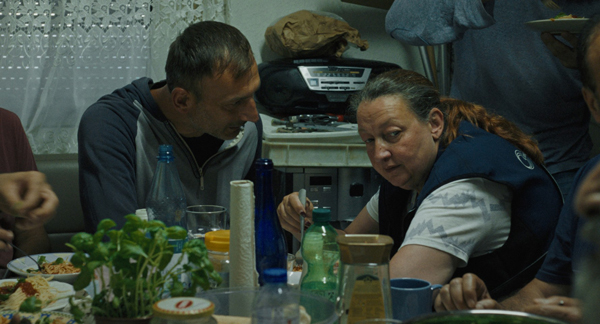
Making her debut, Sabine Thalau is an imperfect protagonist, but nevertheless understandable. A constant state of duress might not excuse some of the terrible choices she’s made, but unless one has experienced such a continuous onslaught under similar circumstances, judgment would best be reserved. Friedrich doesn’t descend into cliched expectations, holding his heroine somewhat accountable for the sinking ship she finds herself clinging to. Nearing retirement age, which is a point of contention on several fronts, one expects the narrative pacing to lead to an inevitable collapse. What’s perhaps most uncomfortable is the lack of camaraderie amongst Heike’s colleagues, each in their own stage of unrelenting survival mode. Best friends suddenly become enemies, and there’s no point of return for some of their choices. Heike’s major failure in attempting to satisfy the whims of her master is to sabotage a colleague’s reputation rather than being transparent about the action she’s required to take. And she’s resoundingly punished for it. And yet, Friedrich’s narrative contends there is potential for hopefulness – but it requires a collective rejection of a poisonous but normalized status quo.
Reviewed on February 13th at the 2026 Berlin International Film Festival (76th edition) – Panorama section. 93 mins.
★★★/☆☆☆☆☆