
Ghosts of Past & Present: Sultan Khoosat Hones His Visual Flair But Latest Devolves Into Silliness

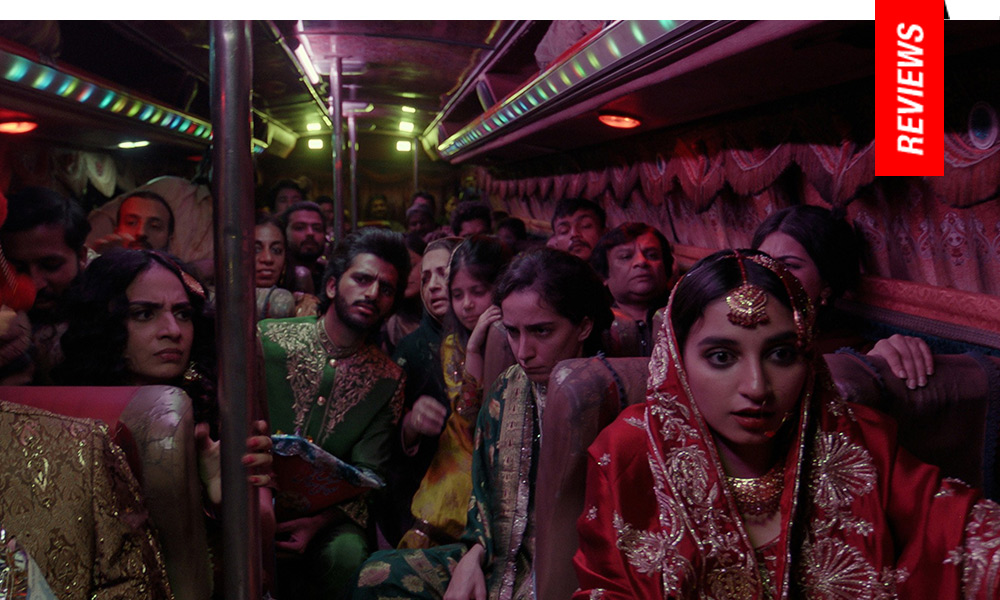
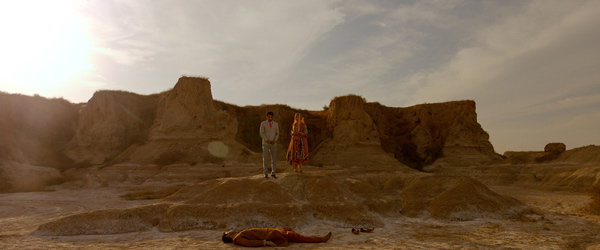
We open on a bustling Pakistani wedding, a colorful and glorious ceremony with dancing, music and traditional practices resembling a carnival. Zeba (Mamya Shajaffar) has just got married to the paranoid and emotionally damaged Sajawal (Channan Hajif), a man with a large red birth mark covering half his face, reeling from his tormented childhood and subsequent deep insecurity. During the wedding a relative accidentally shoots Sajawal’s mother Sohni Ammi (Farazeh Syed) and she’s rushed to hospital. She survives but the support system Zeba finds in her mother in law is slowly fading along with Sajawal’s behavior and mind forcing her into a harsh cyclical reality marriage can bring. There is more hope and muted celebration in the first half and Khoosat revels in the bustling neighbourhoods of Pakistan, a clearly talented director the film never looks less than sumptuous.

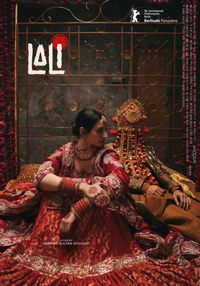
The narrative is loosely split into five sections, with a visual marker of the film’s title expanded out to a tally of five with the “I” of Lali drawn in a way not not unlike how time is measurement when in prison. The tally hints at the increasingly poor situation Zeba finds herself in and speaks for a large portion of South Asian women and the inherent inequality of traditional gender roles. The sisterhood she shares with Sohni Ammi and her mysterious neighbour Bholi (Rasti Farooq) adds necessary glimmers of light but is never explored enough as narrative weight is predominantly shared between the central couple. It is hard to follow every character strand and story thread as the focus is constantly shifting. By the time we reach the climax, Khoosat abandons the restraint that defines the first two-thirds of the film, opting instead for an exaggerated turn that undercuts its earlier nuance. Hajif’s performance turns overly demonstrative, and the scenes lose credibility as a result. Bruised masculinity and childhood trauma can breed a certain type of madness but it is caricature here and undermines any subtle building blocks set up beforehand.
Moments of tranquility between Zeba and Sohni Ammi are often the most effective in Lali. The way they share a laugh or the intricate words of approval that make Zeba feel welcome in the family. It’s a shame that this peace is derailed for a grandiose attempt at dissecting prisoners of their own marriage.
Reviewed on February 21st – 2026 Berlin International Film Festival (76th edition) – Panorama section. 116 mins.
★★½/☆☆☆☆☆