
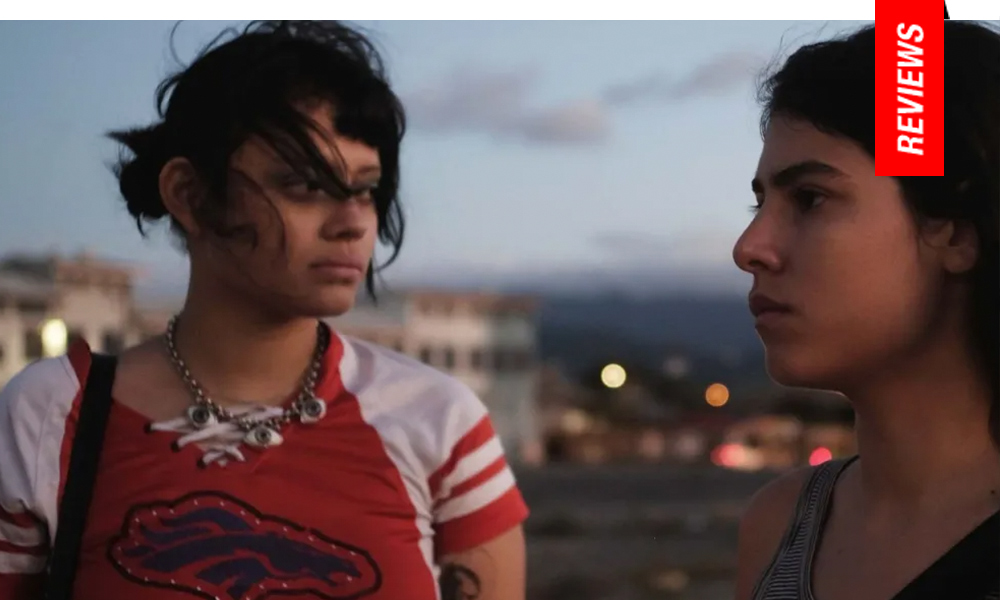
Only Mothers Left Alive: Maurel Funnels Dysfunctional Family Matters


Elsa (Daniela Marin Navarro) has returned to San Jose and is immediately confronted with a significant sense of disarray. Nearing thirty years of age, Elsa appears to be running from a relationship, but it seems to be the least of her worries when she reunites with her younger sister Amalia (Mariangel Villegas), a college dropout who has isolated herself in the family home. Their mother Isabel (Marina de Tavira) has moved out to be on her own and focus once more on her writing career. The impetus seems to be the re-publication of Isabel’s first collection of poetry, the erotically supercharged “The Grammar of Bodies.” But Amalia, reeling from the demise of the maid who actually reared her, has sunk into a world of dysfunction, refusing to let the new maid, Deynira, on the premises, and inviting all sorts of sordid people into the home. Meanwhile, their father Nahuel (Reinaldo Amien) is having his own mid-crisis dating a woman the same age as his children. Elsa increasingly tries to alert her parents of Amalia’s worsening mental state, but to no avail.


What’s most striking about Forever Your Maternal Animal is how Maurel is unafraid to wallow in a sense of bleakness. There’s a constant sense of dread, particularly regarding Amalia, who seems to be dancing perilously close to a psychotic break. While there are moments of humor which border on sardonic, even morose possibilities, the revolving door of dysfunction is reminiscent of something like one of Noah Baumbach’s more sinister ventures, Margot at the Wedding (2007), where it’s unclear which sister (Nicole Kidman/Jennifer Jason Leigh) is actually more stable.
As Elsa, Navarro is a cipher for the audience, using her family’s foibles as a way to avoid facing her own dilemma with the unseen Sven, who’s constantly calling. Mexican actress Marina de Tavira (memorably of Cuaron’s Roma, 2018) amuses as the ambivalent Isabel Rivera, a once noted poet who has considerable boundary issues, it would seem. The republication of her erotic book of poetry is one of several examples which suggests she’s lacking a necessary filter with how she approaches her daughters, like some imperious Woody Allen matriarch who foists her sexual proclivities upon her children. “I’ve already given you many years of my life,” she declares to Elsa, completely ignoring her elder daughter’s concerns about the angst ridden Amalia. Elsa’s relationship with Isabel feels somewhat akin to the mother/daughter duo in Rebecca Lenkiewicz’s adaptation of 2025’s Hot Milk (read review), except Isabel’s manifestations of a dysfunctional motherhood present as emotional withholding or outright disinterest.
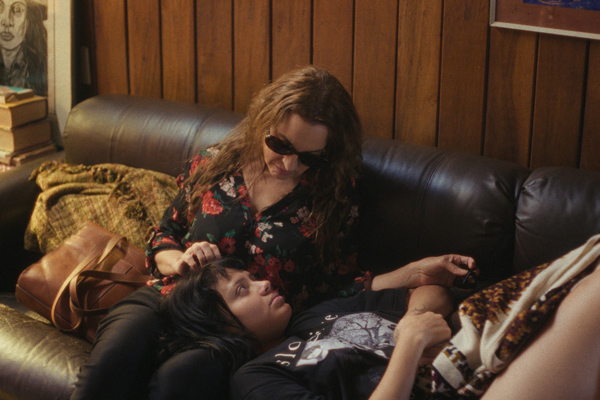
As we get sun dappled bustling snippets of San Jose, darkness is forever encroaching on the edges. Cryptic texts from Amalia are exacerbated by someone spray-painting ‘Puta’ on the side of the house, though it’s unclear if this has anything to do with Amalia specifically or society at large (considering we hear such harassing language in the background as the sisters roam around).
A troubling coterie of shifty men, including an older ‘boyfriend’ to Amalia who is using their house as some kind of storage unit for his suspicious dog breeding venture, are all outfitted with their own bizarre character details (such as naming various marijuana plants after iconic female musical artists, like Nina Hagen, Madonna, and Patti Smith). Disappointed with everyone and everything around her, the plight of Elsa begins to take on claustrophobic proportions, and it’s unclear if her concern or her efforts of intervention will matter at all. In essence, you can’t help someone if they’re refusing to accept it, and sometimes focusing on everyone else’s issues is the most convenient way to avoid your own.
Reviewed on May 16th at the 2026 Cannes Film Festival (79th edition) – Un Certain Regard. 105 Mins.
★★★½/☆☆☆☆☆