This Makes Two of Us: Mitić Explores Binding Connection of Trauma & Silence
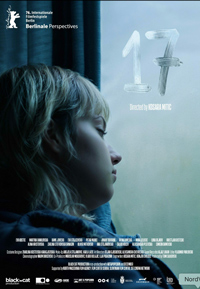
Adolescence is once again cinematically explored as a breaking point between innocence and forced adulthood, and North Macedonia filmmaker Kosara Mitić‘s debut feature tackles this with blunt-force assault realism. Working within the confines of personal, and then shared psychological trauma, 17 visits the cycle of shame, the unseen, the unsaid and the long-game silence with an intense ground-level Dardenne Bros. type immediacy. Conceptually built with inspired by a real-life event curiosity and without sensationalism, while this suffocating, bleak Euro drama tends to feel contained and repetitive narratively, what it does best is present a rare form of female solidarity through violence.
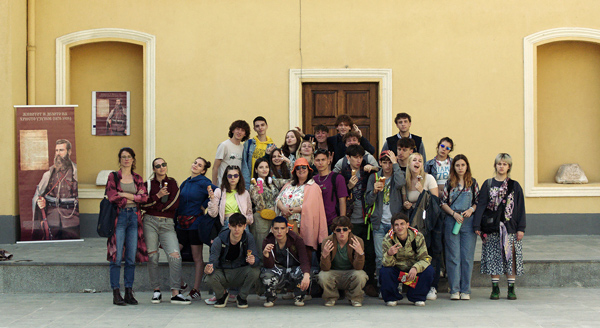
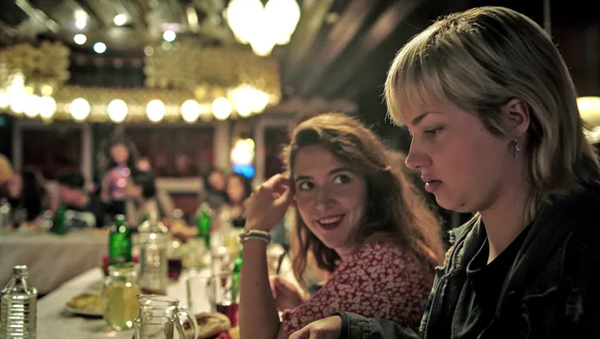
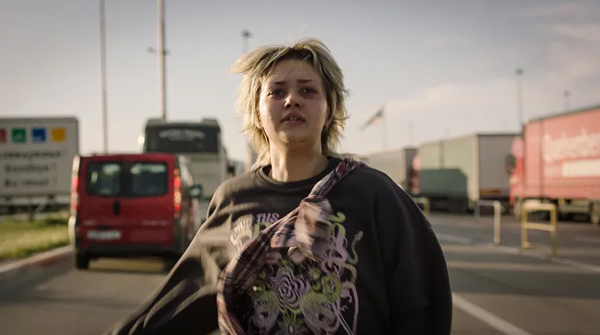
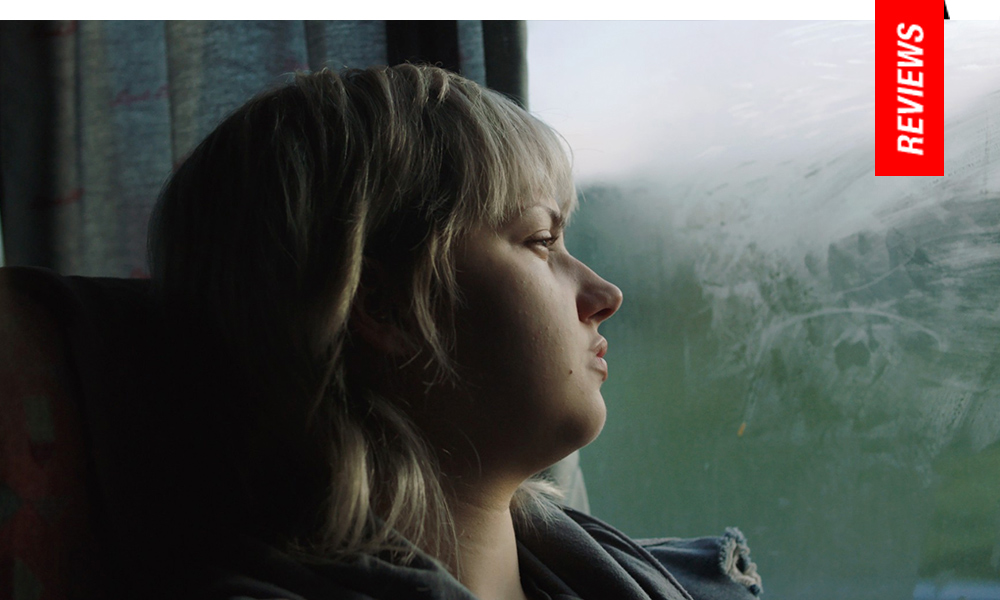
It’s no exaggeration when seventeen-year-old Sara (Eva Kostic) casually mutters that the upcoming school field trip — a loosely supervised museum and sightseeing tour through neighboring European countries with a rowdy group of classmates — is destined to be hellish. Little does she know that keeping a secret will have far-reaching, life-altering consequences. Co-written with Ognjen Svilicic, the film opens with a tense, intimate sequence where intimacy and violence are intertwined and it’s furthermore anguish-inducing when the body count moves from a pair to three participants. It’s the point of reference that viewers think back on when the narrative highlights that trauma is something carried, unresolved, shared and unfortunately repeated. Bleached-haired, dressed in extra layers Sara is keeping her end of the bargain – secrets are kept close to the physical and emotional vest. Before we are shored up at the hotel grounds (she’ll be eventually roomed with her shared seat partner, the less experienced Lina played by Martina Danilovska), the narrative devotes significant attention to the first bus ride — a hormonally charged microcosm that maps social hierarchies and hints at emotional internalization in environments that normalize harm. The kids are not alright.
One of the film’s dramatic strengths lies in its deliberate lack of clarification — a non-verbal pact exists among the teens, victims and perpetrators alike, where torment is kept hidden and the adult world remains absent (the few chaperones also want to let their hair down). A particularly unsettling moment occurs when Sara, who understands the boy’s playbook, chooses not to intervene as someone repeats the same harmful choice she made months earlier — a stark illustration of how violence begets further violence, stemming from a desire to protect oneself while simultaneously denying the capacity to care for others. The final bus ride squashes out this narrative thread – favoring the idea of a shared silence, and burden.
Favoring an observational stance, and void of upticks in dramatic cues with a camera that remains intimately aligned with the girls’ emotional space, the camera works with close-up frames. Cinematographer Naum Doksevski (DJ Ahmet, Stolevski’s Housekeeping for Beginners) capturing a load of non-verbalized layers of insularity. Ethics and morals pushed to the side, 17 is a strong jolt mixing immediacy, intimacy and sensitivity.
Reviewed on February 18th at the 2026 Berlin International Film Festival (76th edition) – Perspectives. 105 mins.