
Fruit on the Vine: Marrakchi Harvests Bitter Justice
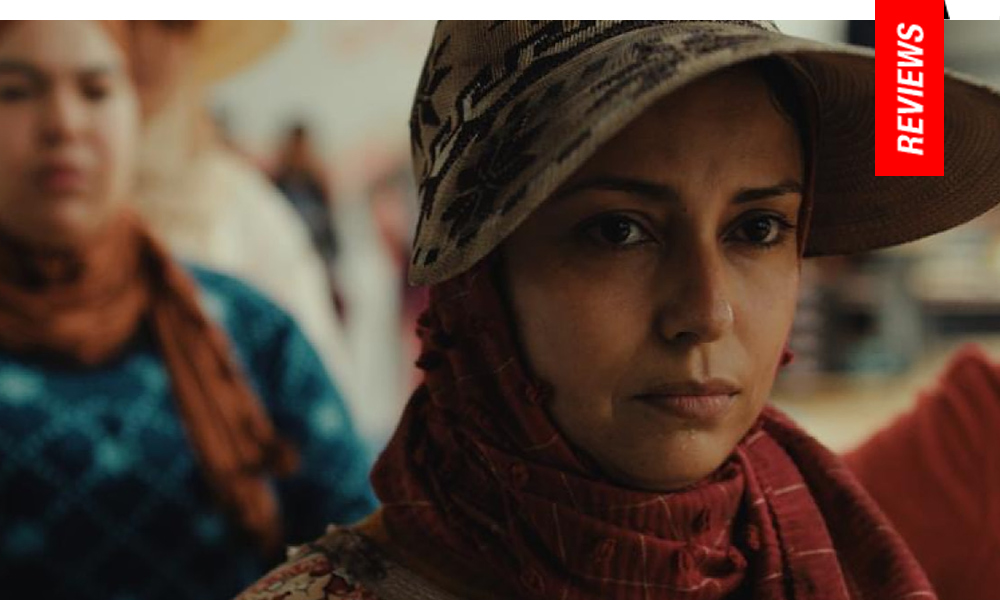
“We give our bodies. All that for peanuts,” is an anguished remonstrance from the protagonist in Strawberries, the first feature film from Moroccan filmmaker Laïla Marrakchi in over a decade. A story of sordid working conditions for seasonal laborers demeaned by their employers in southern Spain, it’s a far cry from Marrakchi’s breakout film, Marock (2005), a sweet rom-com about religiously star-crossed lovers, and 2013’s family reunion film Rock the Casbah (which featured Nadine Labaki and Hiam Abbass). Her latest is led by Nisrin Erradi (the title character in Nabil Ayouch’s Everybody Loves Touda, 2024), a quiet spoken woman desperate for a better opportunity who’s eventually forced to exert valiance in the face of injustice.
Hasna (Erradi) has decided to leave Morocco to pursue seasonal labor in Spain, picking strawberries alongside her friend Meriem (Hajar Graigaa). However, Hasna has had to lie about having a criminal record, having spent six months in prison for adultery, and this employment is a desperate effort to earn enough money to pursue custody rights of her son, which have been taken away. While the working conditions aren’t exactly pleasant, there’s some superficial camaraderie amongst the laboring women, many who find their employer Ivan (Paco Mora) to be quite handsome. But when Ivan sexually assaults Meriem, the friendship between the women is tested, leading Hasna to utilize the assistance of local lawyer Pilar (Itsaso Arana) as a means to seek justice.


The original title, La más dulce, translates to ‘The Sweetest One,’ which obviously has more troubling implications when it comes to the sexual assault of Meriem. In a broader sense, the collective group of women engaged in seasonal labor are indeed the titular berries ripe for consumption, at least as concerns their treatment at the hands of their employers who exploit their desperation to earn money under less than ideal conditions, despite whatever evidence supports the legal aspects of their operation.
The narrative build up is simple and straightforward, perhaps less initially grueling than a similar immigrant experience outlined by co-scribe Delphine Agut in 2024’s Souleymane’s Story. We’re even perhaps misled by focusing on Hasna, who ends up being the witness who must express her solidarity by doing the right thing despite compromising her own tenuous employment in Spain, highlighting how the patriarchal system often gleefully pounces upon tangential, unrelated details to distract from the truth rather than admit contextual realities purposefully designed to keep anyone disenfranchised in a subordinate situation.
Erradi is a stoic and adamant screen presence, and she’s unafraid to vocalize unfairness amongst her fellow laborers, even as this tends to alienate her from those who find it easiest to maintain the status quo by making excuses for their masters. The plight of migrant workers and seasonal labors has long been the subject of many classic films, and there is the spirit Mbissine Thérèse Diop of Ousmane Sembene’s Black Girl (1966) or Yekaterina Golubeva in Claire Denis’ I Can’t Sleep (1994) in Hasna. Initially, there are some tonal similarities between Strawberries and Gael Morel’s under seen 2017 title Catch the Wind (2017) in which Sandrine Bonnaire faces the opposite trajectory as a French factory worker who follows her employer to Morocco and ends up in a comparable situation (and also features Nisrin Erradi).
Arguably, the third act of Strawberries feels a bit truncated, as Marrakchi rushes through the hopeless legal process which is designed to punish the women who have come forward with their claims of abuse. Itsaso Arana (wonderful in Jonas Trueba’s The Other Way Around, 2024) is the anguished Spanish union lawyer who appears to be in white knight mode as Marrakchi slyly suggests she’s more invested in a movement than the players whose asses are on the line, at least judging by her inability to remember her clients’ names. Still, what the film boils down to is the importance of unity when it comes to speaking truth to power. And while absolutely everything remains unresolved in Strawberries, which is perhaps one of its most interesting elements, the spirit of resistance remains intact.
Reviewed on May 18th at the 2026 Cannes Film Festival (79th edition) – Un Certain Regard. 101 Mins.
★★★/☆☆☆☆☆