
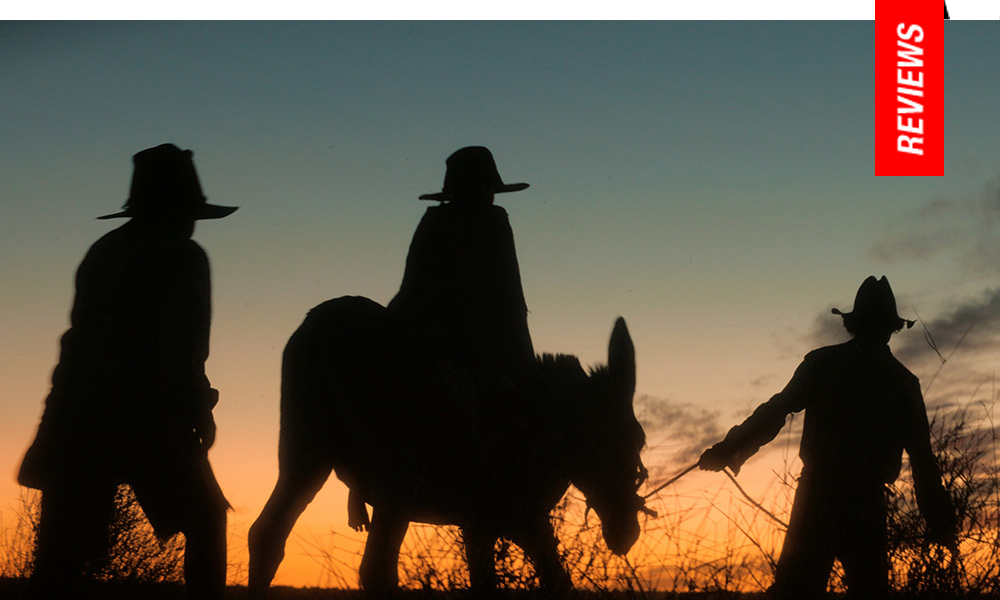
The Torn Birds: Thornton Returns to Brutality of the Australian Frontier

Wolfram is a metallic element which was being mined at the same period as those on the quest for gold. There were often price slumps which saw the abandonment of these mines, where child labor was also often enforced. Although Thornton’s film doesn’t exactly necessitate the four chapter breaks it utilizes, the narrative quickly asserts three distinct clusters of characters we’re eventually waiting to converge. Deborah Mailman (The Sapphires, 2012) is a mother with an infant supposedly being transported to Queensland alongside a Chinese immigrant (Jason Chong). It appears she has been forced to leave her other children behind, though initially it’s unclear why. Eventually, we learn youngsters Max and Kid, half-brothers, have been snatched by a miner named Billy (Matt Nable).
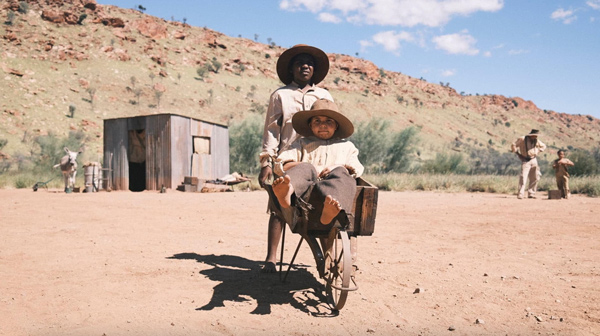

Meanwhile, a vicious roustabout named Casey (Erroll Shand) and his young sidekick Frank (Joe Bird), are on their way to secure a mining lease, sewing discord everywhere they go. They rob Billy and kidnap Max for their own designs, holding up with a distant relative named Kennedy (Thomas M. Wright), an ailing white man whose mixed race son Philomac (Pedrea Jackson) is treated like his servant. And then, finally, there are a pair of additional Chinese immigrants led by the elder Shi (Ferdinand Hoang), who prove to be a blessing in disguise at just the right moment.
There’s much to admire about Wolfram’s storytelling, which is as passionate and cathartic as it is crowd pleasing. Thornton, whose early title Samson & Delilah (2009) leans more heavily into bleakness, doesn’t shy away from moments of extreme violence waged against indigenous peoples, often in ways which earn comparison to Jennifer Kent’s The Nightingale (2017). Across the globe, US films increasingly shy away from showcasing the savagery of slavery and colonialism, often favoring a white savior to assert elements of wishful thinking about whether there must have been some whites doing the right thing. A line from Philomac succinctly confirms there is so simply no one coming to save them, even with a white man as a father. “White people are trouble.”
The real stand out here is Pedrea Jackson as Philomac, and it’s characterization which confirms we’ve come a long way since something like Fred Schepisi’s The Chant of Jimmie Blacksmith (1978). At the same time, there’s an overt convenience in the storytelling, especially in the finale, which rushes to unveil a few too many fortuitous intersections. Still, Wolfram utilizes old school parameters while also recuperating erased perspectives, and builds a strong emotional investment with its protagonists that often assist in overlooking these slights.
Reviewed on February 17th at the 2026 Berlin International Film Festival (76th edition) – Main Competition. 102 mins.
★★★/☆☆☆☆☆