
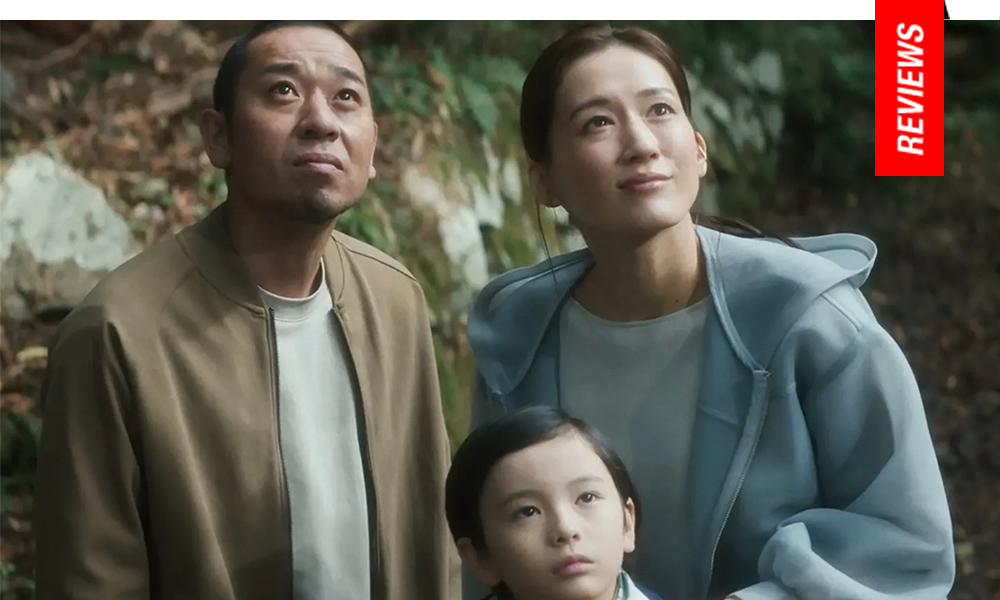
I’m a Cyborg, But That’s OK: Koreeda Explores Cruise Control with AI
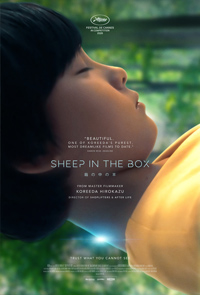

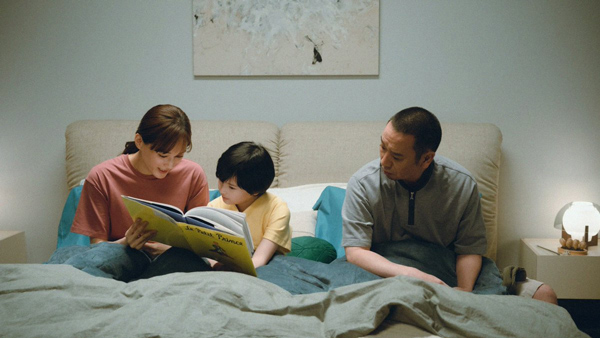
Otone (Haruka Ayase) and her husband Kensuke (Daigo Yamamoto) receive a tempting invitation in the mail from a company called REbirth, offering them, free of charge, the chance to reunite with their missing son via a humanoid robot. Kensuke is skeptical, but Otone jumps at the opportunity. Despite their successful careers (she’s an architect, he runs a construction company), both which have thematic resonance with the new ‘addition’ to their family, it’s likely not a service they could otherwise afford. When Kakuru (Rimu Kuwaki) arrives on their doorstep, Kensuke dismisses the humanoid child as nothing more than an advanced Roomba. But slowly, both parents warm to the curious being, which also allows them to finally mourn the loss of their biological son. But, eventually, Kakuru yearns for autonomy.

Kore-eda often dips into more lavish, exaggerated genre techniques, and Sheep in the Box exists in a similar realm to other titles, such as the early classic After Life (1998), or more specifically, the underrated Air Doll (2009), wherein Doona Bae stars as a sentient sex doll navigating the exploitive pratfalls inherent to her existence. There’s a sinister element, of course, to this Pinocchio-like scenario, though explored more sensationally in Steven Spielberg’s A.I. (2001). Otone and Kensuke, despite the latter’s reluctance, actually seem to love children, unlike the reprehensible foster parents presented by Spielberg. Kore-eda carves out a path somewhere between the yearnings of rebel replicants in Blade Runner (1982) with Kogonoda’s sentimental After Yang (2021).
The subplot involving a band of teenage robots clandestinely plotting to escape their owners (and collect abandoned human children along the way) and build a weird Ayn Rand style utopia in the forest feels woefully underdeveloped, especially considered the humanoids eventually begin to resemble the alien brood mentality from Village of the Damned. A parting shot in the film’s schmaltzy final moments, the children gazing silently from the foliage (as they can correspond better with nature than their human creators), feels exactly like the closing of Harry and the Henderson (1987).
The potential explorations of Sheep in the Box seem endless, but Kore-eda feels beaten to the punch (take the creepy Sandra Wollner film The Trouble with Being Born, 2020), even by the standards of his own filmography. Frustratingly limited and unfortunately banal, it’s one of the prolific filmmaker’s most disappointing efforts to date and feels desperately in need of an updated operating system as regards its narrative reach.
Reviewed on May 16th at the 2026 Cannes Film Festival (79th edition) – Competition. 126 Mins
★★/☆☆☆☆☆