

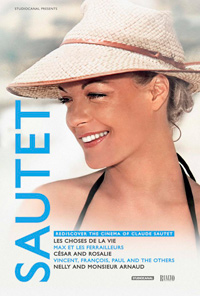
 Rialto Pictures resurrects five classic titles from French auteur Claude Sautet in brand new DCP versions for a mini-retrospective one week run in Los Angeles (July 24th – 30th) at the newly revamped Laemmle Royal Theater.
It’s a considerable spotlight on a neglected voice from one of 1970s French cinema most prominent figures. Sautet, who trained as a painter, sculptor, and music teacher before becoming a student of film, worked his way up to director in 1956 with his debut, Hello Smile! He continued with several film noir gangster films, like 1960’s Classe Tous Risques, a title that would gain wider consideration years later (and is now part of the Criterion collection). However, Sautet was most prominent as a screenwriter in the 1960s, passed over during the Nouvelle Vague as he adapted Jean Rodin’s novel Eyes Without a Face for Georges Franju, Backfire for Jean Becker, and Banana Peel for Marcel Ophuls.
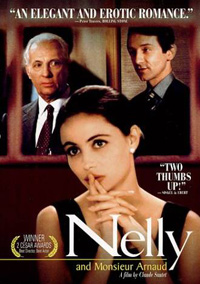 In 1970, Sautet would get his first shot at international acclaim as a director (as well as his only shot at the Palme d’Or in the Cannes Film Festival) with The Things of Life, a film credited as reviving the career of actress Romy Schneider (who would continue to collaborate with Sautet on several more features). It began a successful decade for Sautet, who would also make several films with stars like Michel Piccoli and Yves Montand. In his later career, he would win two Cesars for best director, including for his widely regarded masterpiece, A Heart in Winter, and for his final film, 1995’s Nelly and Monsieur Arnaud, both starring Emmanuelle Beart.
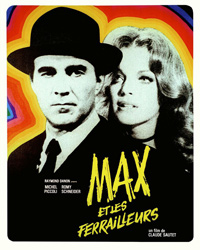 Rialto releases five of his titles, four of them from his golden period of the 1970s (including three Romy Schneider headliners), with The Things of Life (1970), Max and the Junkmen (1971), Cesar and Rosalie (1972), Vincent, Francois, Paul, and the Others (1974) and Nelly and Monsieur Arnaud (1995). A master of intimate dramas navigating careful, fragile relationships (often involving a musical component), it’s an amazing chance to get a taste of several lesser known titles long unavailable to English speaking audiences.