

In the Forests of the Night: Gray Frames Fearful Symmetry
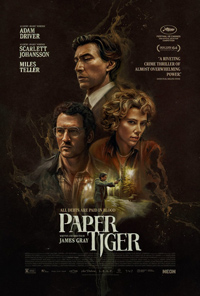 Had James Gray been prolific during the glory days of New Hollywood from the late 1960s through the 1970s, he would have been cemented as an iconoclast among the likes of a Scorsese or Schrader, celebrated for his formidable studies of men defined and then broken by the hubris of daring to dream in the impossible shadows of a doomed world. Hearkening back to his first trio of films, Little Odessa (1994), The Yards (2000), and We Own the Night (2007), Gray brings his element of mythical tragedy down upon the heads of two brothers embroiled by greed and circumstance during the Age of Excess in 1986 Queens, New York. Gray sets the tone with a quote from Aeschylus with a line from Agamemnon – “Let there be wealth without tears; enough for the wise man who will ask no further.” In short, Paper Tiger is partially a film about ‘more money, more problems,’ but also, quite powerfully, a study on how the tantalizing facade of the American Dream is an express elevator to hell for anyone who desires to outstrip the fate of their economic realities.
Irwin Pearl (Miles Teller) is an engineer happily married to his wife Hester (Scarlett Johansson), with whom he shares two sons, Scott (Gavin Goudey) and Ben (Roman Engel). There modest lives are poised for transition with Scott primed to finish high school and attend college. Suddenly, Irwin’s older brother Gary (Adam Driver) calls, an ex-police officer who has become a successful entrepreneur. Gary is on the verge of creating a new consulting firm in order to court some Russian businessmen who have usurped control of the Gowanus Canal in Brooklyn, one of the most infamously polluted passages of water in the country. Gary believes he can make a profit by hiring Irwin to advise the Russians on all the required permits necessary to legally clean up the canal. Unfortunately, business doesn’t go according to plan. Soon, Irwin’s family is at the heart of a maelstrom Gary isn’t sure he can save them from. To make matters worse, Hester begins experiencing troubling symptoms suggesting worse things to come.
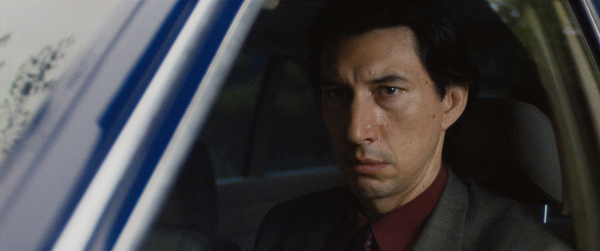
Paper Tiger plays like the musclebound brother of J.C. Chandor’s A Most Violent Year (2014), set in NYC only five years earlier. If it’s essentially a tale about two brothers resisting descent into corruption, their self-righteousness choices have bitter consequences which set them both on a bath of inescapable demise (and could easily be called A Most Violent Week). Fate also curls her cruel, infecting fingers around Hester, a name suggesting potential martyring homage to Nathaniel Hawthorne’s societal victim and her child, Hester and Pearl Prynne. Scarlet Johansson manages to impressively move beyond the potential caricature of her 1980s stylization, particularly in two sequences wherein she’s flustered and shaken, the writing on the wall for her own dark destiny spelled out as resolutely as her husband’s when an association with Russians inheriting territory previously ruled by the Italian mafia is mentioned. The dye was cast before the opening credits ironically conjuring a term of ineffectual threats. This is a world of all bark and all bite.
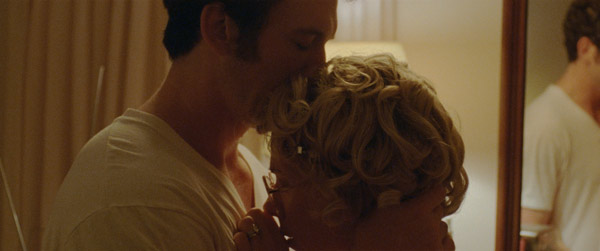
Gray expertly builds a sense of dread as the film progresses, particularly in a sinister home invasion intended to threaten the Pearls. DP Joaquin Baca-Asay (Gray’s Two Lovers, 2008) channels the hazy, graininess of the period, a world on the verge of slipping into dread and paranoia, a prologue to their purloined safety and stability. Teller, who feels like an emasculated mensch who is in over his own head, like those hapless husbands in action and erotic thrillers from the 80s and 90s (such as Kurt Russell in Unlawful Entry or David Strathairn in The River Wild, for random instances), is surprisingly compelling as a family man suddenly swept away by an impossible inferno. More typical and familiar is an oily Adam Driver as an ex-cop who somehow believes the game he’s playing with allow him to remain uncorrupted. “We’ve never played in the dirt,” Irwin tells Adam, but it’s a statement which no longer applies to a world submerged in sludge and mud.
Reviewed on May 16th at the 2026 Cannes Film Festival (79th edition) – Competition. 115 Mins
★★★★/☆☆☆☆☆