
The Blindness of Strangers: Dorabialski Stings the Storyteller
“In the end, we’ll all become stories,” per Margaret Atwood, a sentiment which is ultimately at the metatextual heart of Agata the Writer, the sophomore narrative feature from Kuba Dorabialski. Born in Poland, Dorabialski seems to be drawing upon semi-autobiographical elements between himself and leading lady Mia Wasikowska, whose Australian-Polish roots dictate pertinent elements of the narrative, where, once again Dorabialski becomes immersed in the parallels and intersections between seemingly disparate European cultures, as he did with 2021’s Connection of the Sticks. A rather droll and tranquil exercise unfolds at the initiation of a talented writer struggling to formulate her second novel by throwing herself into the traumas of another country, whereby she learns some difficult lessons about ownership and authorial integrity. Ultimately, what possession does a writer have over their subject? Is stepping into the realm of another culture appropriate, or is the notion of examining trauma a universal aspect all have the privilege of attempting to navigate?
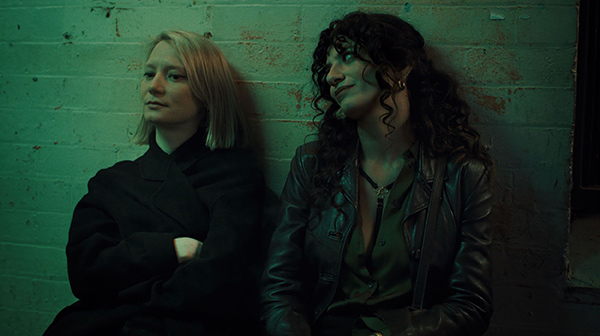
Agata (Wasikowska) receives a novel opportunity to leave behind Sydney for Sarajevo to stay in the empty home of a dear friend who wants to push her out of her writer’s block. She decides she wants to write a novel about the Bosnian War and the dissolution of Yugoslavia, perhaps as a nascent backdrop for a quiet story about human resilience. As could be expected, locals she interviews try to dissuade her, suggesting her well intentioned approach is doomed to come across as exploitative. Agata must reconsider her purpose and merits as a writer.
Some droll narration initially sets up Agata as some kind of forlorn Woody Allen waif, highlighting a superficial, meandering process employed by a writer who seems to be grabbing at straws for inspiration. Her native tongue allows her to navigate the Bosnian language, which she proudly shares with her subjects. An ornery theater director named Jasmina (Vedrana Bozinovic) strikes the first blow by suggesting Agata believes she shares a ‘magical Slavic bond’ thanks to her Polish background. Jasmina further muses that ‘war is boring,’ and why isn’t she researching historical terrors closer to home? Ironically, we learn Jasmina doesn’t have any control over what material she’s employed to direct, though Agata doesn’t know this.
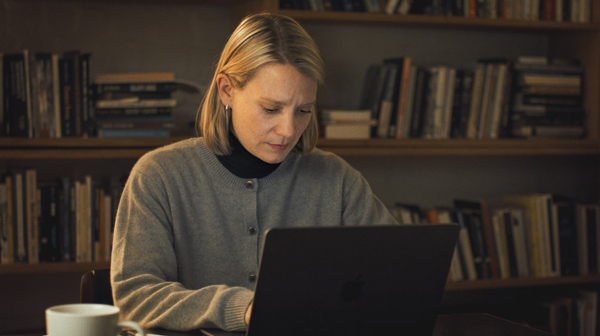
Agata can’t seem to articulate why exactly she’s adamantly pursuing the Bosnian war as a background for a supposed love story, which means she isn’t quite prepared for the pointed reactions she incurs, including a widow who stops the interview with the epiphany that she’s now so far removed from the trauma she’s perfected victimhood as performance. “Your story can’t help anyone,” she concludes. As Agata agonizes over her manuscript, other weird things in the background involving missing pieces of art from her friend’s home suggest a hint of menace, as if Agata’s presence allows also for a sort of physical theft (one of the stolen paintings is an arresting portrait of a woman defecating on herself, deserving of a narrative all its own).
One wishes Dorabialski would jostle Agata further out of her earnestness. An author can write about whatever they damn well please, but the end result might end up being a campy misfire. Agata approaches her idea with such gusto one senses a bit of Pia Zadora adamantly slamming on her typewriter as she writes a grueling saga of Vietnam in The Lonely Lady (1983). Agata seems to want to make her own version of Michael Winterbottom’s Welcome to Sarajevo (1997), and her perfunctory drive would seem to court the same sense of obliviousness of someone like a William Styron, who won the Pulitzer Prize for The Confessions of Nat Turner (1968) though he hardly seems the appropriate authorial expert on the subject. Instead, Dorabialski has Wasikowska reading Agata’s prose to us, her audience, which eradicates the film’s tone by turning the narrative into a mundane book reading few would be interested in listening to (especially for such an extensive swath of time). One wishes Agata the Writer had taken a page from Bartleby the Scrivener and come to the conclusion that she would ‘prefer not to.’
Reviewed on September 6th at the 2026 Venice Film Festival (83rd edition) – Giornate degli Autori. 95 Minutes.
★★½/☆☆☆☆☆