
Things to Come: Bourgeois-Tacquet Explores an Affair to Remember
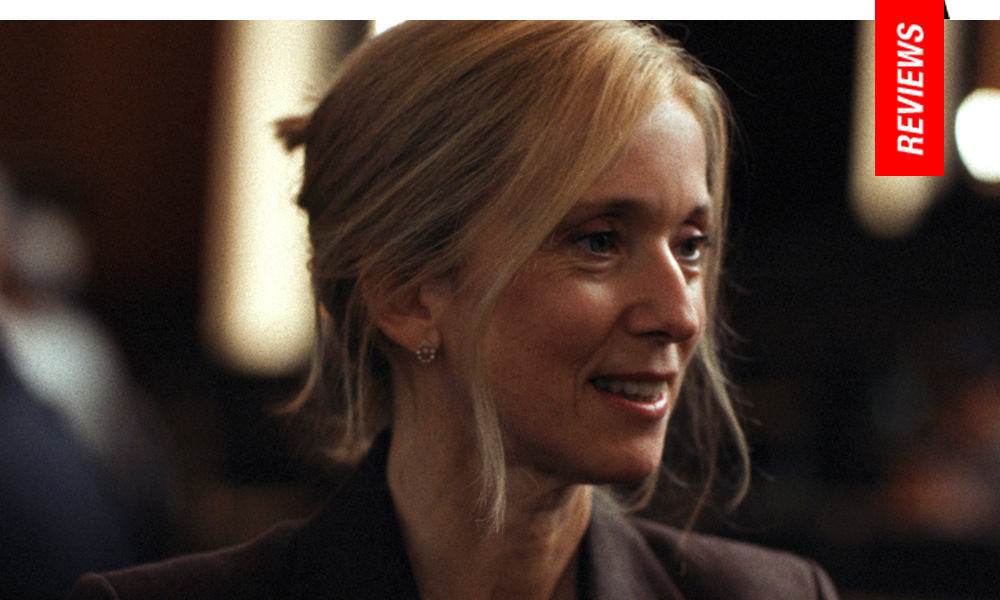
Crimes of the heart are afoot once more in Charline Bourgeois-Tacquet’s A Woman’s Life (La Vie d’une femme), a film which feels a lot less generic than its title suggests (and is no relation to the 2016 Guy de Maupassant adaptation from Stephane Brize, which wielded it ironically). Led by the effortless Léa Drucker, the intensely paced life of a high profile surgeon is suddenly rejuvenated by a surprise affair with a writer shadowing her work at a state-run French hospital, fortuitously when it seems everything else around her seems to be eroding. Patches of narrative banality and fussy details are thankfully overshadowed by an effervescent lead performance which manages to unite all the messy threads into a satisfying melancholic portrait of a rigid personality who (maybe) finally learns a painful lesson in the necessity of exploring passion on her own terms.
Gabrielle (Drucker) is the Unit Head surgeon specializing in facial reconstruction at a hospital with dwindling resources. She leans heavily on her assistant Kamyar (Laurent Capelluto) and seems more comfortable being in control of a frantic environment than she is in her placid home-life with husband Henri (Charles Berling). Frida (Melanie Thierry), a writer researching hospitals for a new project, sparks a connection with Gabrielle, and the two women become involved in an affair. As Gabrielle’s hospital changes facilities, her assistant and long-time friend unexpectedly takes a position with a private hospital, but Gabrielle finagles the transition into a way to spend more time with Frida. Unfortunately, Frida has just accepted a year-long residency at a writer’s workshop in Kyoto.
Bourgeois-Tacquet’s previous feature, 2021’s Anaïs in Love (read review), much more deftly and vibrantly explored unexpected romantic liaisons with a striking fluidity, charting as it does a romance between Anais Demoustier and Valeria Bruni Tedeschi (similarly set to classic pop songs enhancing the mood of the swoon). A Woman’s Life is tonally in stark contrast, the extensive hospital sequences outlining banal bureaucratic pratfalls like countless other contemporary French procedurals, such as Hippocrates: Diary of a French Doctor (2014) or Emmanuel Bercot’s 150 Milligrams (2016).
Drucker, who recently played another woman making questionable sexual choices in Catherine Breillat’s Last Summer (2023), handles the frenetic pace of Gabrielle’s work life capably enough, but it’s outside of this environment where she (and the film) actually gathers a pulse. Bourgeois-Tacquet unfortunately splices the film with unnecessary chapter headings thematically pinpointing each sequence of events, which also tends to interrupt the momentum, as if the film keeps slamming on the brakes.
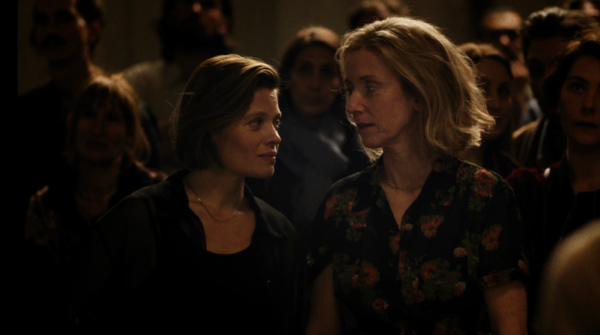

Slowly, it appears Gabrielle has become accustomed to minimizing her own needs since childhood, at least evidenced by another trope wherein she feels responsible for ensuring her neglectful mother (Nouvelle Vague star Marie-Christine Barrault) receives proper care in the throes of Alzheimer’s. Her husband (Charles Berling, once again playing an unsatisfactory spouse) coddles his adult children from a previous marriage, which robs them of both intimacy and harmony at home. It’s no surprise Melanie Thierry’s free-spirited Frida feels appealing, though she’s merely as one-dimensional to the audience as she is to Gabrielle.
Themes and characterization suddenly coordinate splendidly in the third act when, at a conference outlining Gabrielle’s speciality, she waxes philosophically about her role in providing her patients with a sense of normalcy by creating a ‘passable’ face, arguably requiring (or allowing) for a new identity. It’s here we realize Gabrielle, despite all her expertise, has always focused on the exterior, the superficial. It’s her own interior identity which has been neglected. A chance meeting at this Turin-based conference reunites Gabrielle with Frida, who callously brings her new girlfriend Setsuko (Yumi Narita) along for the rendezvous. Their dalliance was a passing gratification for Frida, who has had the liberty of living a life out loud, untethered. Gabrielle, in comparison, has only just allowed herself the exultation of satisfying her desires, clinging to the memory of their affair mournfully instead of having had the foresight to be content in cherishing the moments as they were transpiring. Perhaps there is a complexity to the film’s title, a double edged sword suggesting A Woman’s Life refers to both Gabrielle and Frida – one chooses and one has chosen.
Reviewed on May 13th at the 2026 Cannes Film Festival (79th edition) – Competition. 98 Mins.
★★★/☆☆☆☆☆