

Autopsy Audit: Gabbriellini Examines the Choices Before the Mistakes
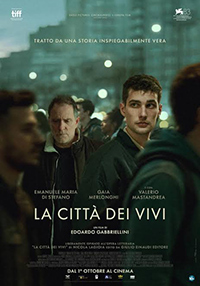 Those left behind to pick up the pieces are rarely the center of film dramas — and they’re rarely an afterthought either. Adopted, in love, surrounded by friends and moving between Rome’s outskirts and centre, caught in that peculiar age when adulthood feels both imminent and impossibly far away, a charismatic Emanuele Maria Di Stefano wonderfully inhabits a young man whose fate is already written in the cards — finding his way, finding his footing, and slipping just enough into Christiane F. territory to suggest a life beginning to veer off course. It is somewhere in that emotional and physical space that Italian filmmaker Edoardo Gabbriellini approaches The City of the Living, (La città dei vivi) turning a sordid true-crime story that shocked a nation into something far more intimate: a portrait of the life, relationships and fragile possibilities that existed before Luca became a headline.
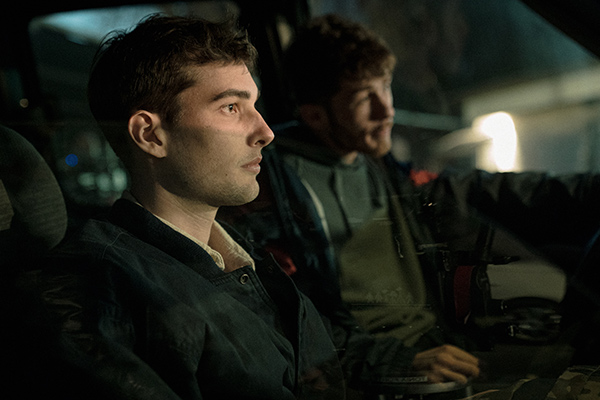
Adapted from Nicola Lagioia’s account of the 2016 murder of Luca Varani, Gabbriellini makes an intriguing decision to push the violence itself toward the margins. What matters is not explaining how such a brutal act could happen, but allowing us to inhabit the emotional and social ecosystem surrounding Luca before everything breaks. He has given up on school and, increasingly impatient with how he measures himself against others, sets his sights on getting his own apartment — a place he can share with his girlfriend and build a life of his own. But his double life is less a mystery to be solved than a portrait of a young man still testing the boundaries of who he might become, until a seemingly random encounter abruptly collapses that possibility.
His family, girlfriend and friends become a kind of urban chorus, their ordinary lives accumulating into something quietly ominous mostly in the Roman Battistini neighborhood. Rome, meanwhile, is less backdrop than gravitational force — beautiful, sprawling and indifferent, a city of movement and dead ends. And it takes all kinds of people to populate those spaces – empty lots, underground parties and street corners. What are the next door neighbors doing? Who are those kids loitering on the streets? How do the rich spend their money? It’s all part of the same cesspool — an endless loop like those who spend hours on video poker machines.
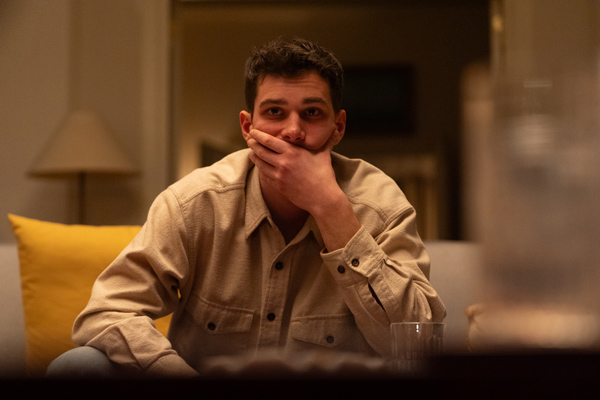
There is a deliberate restraint to the filmmaking, with Gabbriellini favoring suggestion over exposition and keeping the camera at an emotional remove. The result can feel almost lyrical in its refusal to sensationalize, particularly when the film brushes against the darker corners of Luca’s double life. Cinematographer Amine Messadi removes gloss favoring a naturalistic approach which helps create a curious tension: the closer we get to Luca, the more fiercely the film refuses to tell us what to think about him. He remains unfinished, contradictory and alive — which makes the knowledge of what is coming feel less like suspense than a kind of mourning in advance. The horror in the film is treated clinically cold, without any kind of human warmth. We find dehumanized suffering followed by snapshots — editor Jacopo Ramella Pajrin does a commendable job here void of sensationalism and/or censorship.
What Gabbriellini ultimately captures is the cruelty of a coming-of-age story that never gets to finish. Luca is still searching for his place in the world when the world suddenly makes that search irrelevant. Like catching up with an old friend encountered by chance on a bus, The City of the Living has a strange way of lingering, especially for those willing to sit with the ache of innocence lost.
Reviewed on September 4th at the 2026 Venice Film Festival (83rd edition) – Orizzonti. 104 Minutes.
★★★½/☆☆☆☆☆