
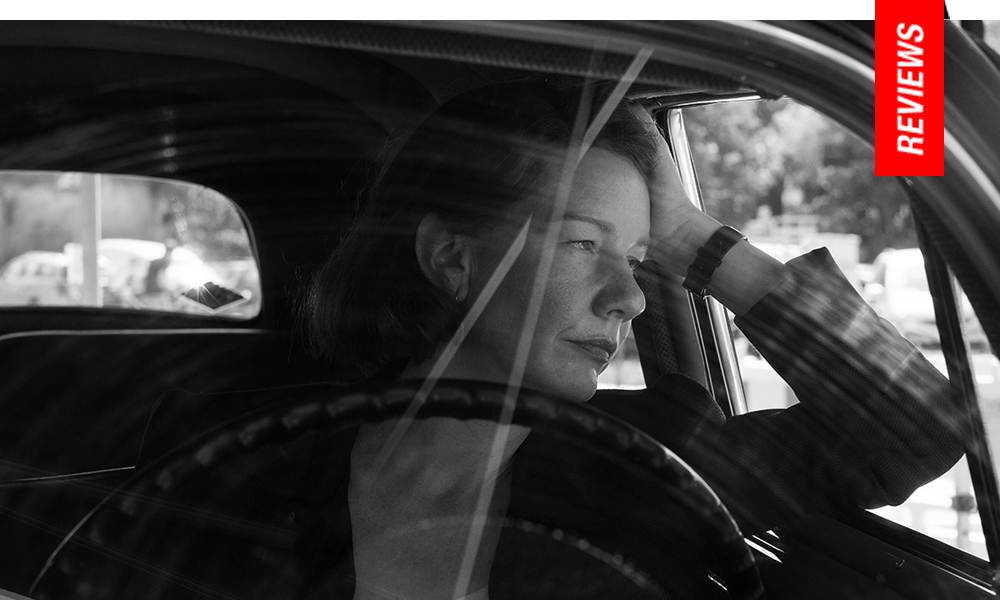
Every Mann for Themselves: Pawlikowski Remains Chilly with Cold War Permafrost

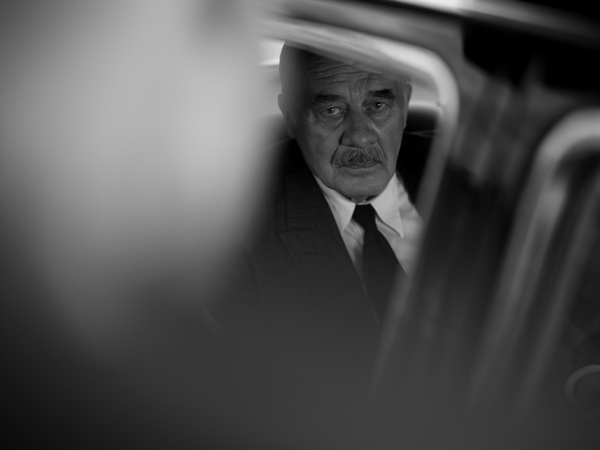

Thomas Mann (Hanns Zischler) has returned to his native Germany for the first time in fifteen years to accept the Goethe Prize in Frankfurt. He’s accompanied by his daughter Erika (Sandra Hüller), who had previously sworn she would never set foot in the fatherland ever again. However, her mother’s health has forced her hand. Sidestepping the ceremony is her notable brother Klaus (August Diehl), who is struggling with depression and chemical dependency issues. In Frankfurt, Mann confirms he will also be traveling to Weimar for a similar ceremony, which sparks ire in the press, potentially endangering his American citizenship due to the shifting political alliances between the US and Soviet Union.
Łukasz Żal’s velvety black and white cinematography already lends itself to a crisp austerity, but his previous collaborations with Pawlikowski (Ida, 2013; Cold War, 2018) and Huller (The Zone of Interest, 2023) have never seemed so clinical, arguably sedate, as they do here. There’s little by way of excitement, and Pawlikowski adeptly conjures a world reviving from paralysis. But the family at its center isn’t able to redefine themselves like a phoenix from the ashes, their pasts, despite the privilege of being ‘on the right side of history’ as ‘good Germans’ whose hands are clean, still nipping at their heels like a curse they will never exorcise. Chiefly representative of this is August Diehl as Klaus Mann (who just portrayed the polar opposite as the terrifying Nazi who lived to a ripe old age in Kirill Serebrennikov’s The Disappearance of Josef Mengele, 2025). Betwixt the awards ceremonies, Klaus commits suicide, a ghost haunting his sister and father on their journey.
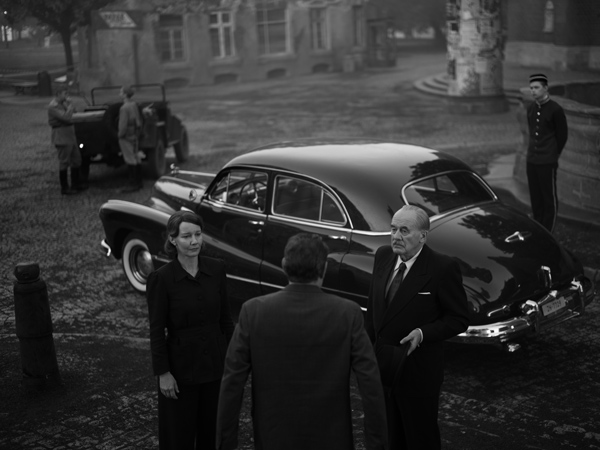
Hackles are raised in Frankfurt, where Erika is confronted by her ex-husband, actor Gustaf Grundgens, who sold his soul and became a major film star of the Third Reich, which Klaus documented in his publication, Mephisto (paralleling this film’s grappling with Faustian dealings, later adapted by Istvan Szabo in 1981 featuring an iconic performance from Klaus Maria Brandauer). Mostly, we’re left to absorb some referential zingers in the script co-written by Henk Handloegten, which gives us plenty of Goethe, but also Wilde and Kant. Hanns Zischler (who is reminiscent of Armin Mueller-Stahl here) is formidably detached as a notable persona who can’t be bothered with his son’s demise, leaving Huller (hot off her Best Acting prize in Berlin for Markus Schleinzer’s Rose) to break through the icy pallor of environments desperate to resume a sense of controlled normalcy. But trauma continues beyond their contained universe, as evidenced by a man who manages to catch their attention in Weimar about the political prisoners still being housed right next door in Buchenwald.
For those who are blissfully unaware of Thomas Mann and his kin (a fantastic 1997 publication, Exiled in Paradise: German Refugee Artists and Intellectuals in America from the 1930s to the Present, by Anthony Heilbut, is a phenomenal resource), Pawlikowski’s Fatherland plays like an ambiguous character study about a fractured family faced with an identity crisis. Beyond the various confrontations with singing chorus members accosting them at every step of their journey, this is a joyless endeavor, capturing a specific catch-22 conundrum mashing together doomed cultural and familial expectations.
Reviewed on May 14th at the 2026 Cannes Film Festival (79th edition) – Competition. 82 Mins
★★★½/☆☆☆☆☆