

The Devil is a Woman: Strippoli Concocts an Elegant Parent Trap
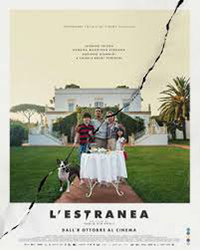 As far as horrific moral fables about Catholic guilt and resisting temptation go, director Paolo Strippoli unleashes a doozy with his fourth feature, The Spiral. Had an inventive producer been so inclined, Strippoli could have even involved with the ongoing effort to recruit a coterie of international directors to remake each chapter of Kieslowski’s Dekalog (thus far contributed to by Asghar Farhadi, and in a rather circuitous sense, Lee Chang-dong). False idols, murder, covetousness—-these are but a few of the felonious errors committed by a desperate mother played with sublimely oblivious menace by Jasmine Trinca, in what might be her most intriguing role to date. As far as elegantly stylized horror films go, Strippoli hits a home run with a rueful and devilish metaphorical homily.
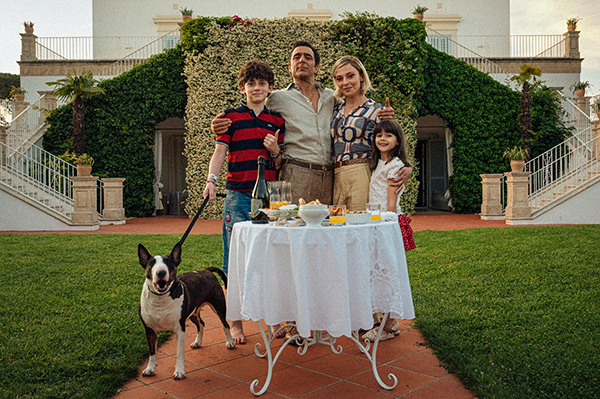
A torrential downpour lashes out on Rome as Anna (Trinca) , a fashionable woman of means, descends upon her daughter Alice’s (Romana Maggiora Vegano) apartment. In a state of duress, Anna claims she must make a confession – everything she’s known about their family is a lie. Skeptical, Alice (who had to sneak out a guest who everyone but her mother can see is clearly her lover) makes tea and sets in for a wild story beginning back in 1999, nearly at the eve of the new century. Having just moved to an inherited palatial estate in Bari, the family finds runaway success by establishing a luxury boutique, Colonna (which could be used to describe Anna’s relationship to her family and their lifestyle). But when their young daughter Alice is viciously attacked by the family dog and on the verge of losing her leg, Anna meets a strange woman (Valeria Bruni Tedeschi) in the hospital chapel, smoking a cigarette and offering the grieving mother succor. At first. As their conversation becomes heated, the stranger presents a fantastical proposal – Alice’s leg can be saved in exchange for a terrible transformation of her son, Tobia. Out of despair, Anna agrees. Alice heals, several years pass, but as Tobia is helplessly besotted by obesity, it would appear the woman’s promise was true. When tragedy strikes the family again in 2005, the strange woman returns with another offer.
The set-up is quite effective, staging the hospital, an intersecting zone of lives in flux, as the hunting ground for the devil to tempt his prey. Fascinatingly, the hospital chapel, designed to look like a portal to hell located in the nocturnal bowels of a labyrinthine building, is where a disastrous, Mephistophelean deal is made. Valeria Bruni Tedeschi, smoking cigarettes in her beige trench coat, may be one of the most deliciously entertaining personifications of Satan you’ve experienced, making a Sophie’s Choice (1982) inspired stab at pulling Anna into her eternal orbit. But this won’t be a tit-for-tat The End of the Affair (1955/1999) kind of agreement, because as the stranger initially informs Anna, (who, to her credit, does keep offering up herself for sacrifice), ‘this isn’t how this works.’ As can be expected, and as the chapter headings convey, the devil expectedly makes the rounds on Anna’s family because fate is a hunter and cannot be escaped.
The narrative is framed by a harried Anna, and much like a character she plays in Nanni Moretti’s latest feature, It Will Happen Tonight, Trinca undergoes an aging transformation as we chart her journey from 1999 to present day. Like in the Moretti film, Trinca easily channels an old Hollywood sort of glamor in chameleonic ways, this time around resembling Anne Bancroft in one of her predatorial roles, like The Graduate (1967) or G.I. Jane (1997). The expository flashback results in a cozy, increasingly claustrophobic campfire tale, a deluge overtaking Rome right outside Alice’s apartment building, with visualization of a world of wind and rain spiraling out of control (replete with a cheeky nod to the calling card of the villainous Jigsaw from the Saw franchise). If God promised the ‘fire next time,’ the devil seems more than content with simply going on his own drowned world tour.
There are obvious class metaphors at play to stage the groundwork for Anna’s characterization, and Strippoli seems to be taking aim at the toxic worldview of the bourgeoisie, where materialism allows for an innate vulnerability in those who are forever unwilling to give up any of their possessions or allow their social status besmirchment – they have too much to lose.
In the 1999 segment, where all the trouble begins, the family, seemingly against their usual highfalutin standards, adopt Zuppa, a dog from the pound. A glamorous party in their new home, where everyone is dressed in white (because what other palette works well with soaking up the stains of their vampiric methods?) finds Anna in fine form. The deferred dreams she had for herself are staged for actualization in her daughter, who has just booked a Barilla pasta commercial to be directed by Daniele Luchetti (a minor dig at the noted director’s appeal to the piccola borghesia). She treats her staff like the onerous Joan Crawford in the 1950 adaptation of the 1925 play George Kelly, Harriet Craig, behavior which will come to haunt her family in more ways than one. At the hospital, Tedeschi brilliantly stirs Anna into a fervor, for no crippled child will ever appear in a Barilla commercial (because, as we all know, Barilla prefers picture perfect families in their advertisements, and what horror should they have also cast a child who would become a lesbian). Her stage mother dreams (a la Anna Magnani in Luchino’s 1951 Bellissima) in danger of evaporating before her eyes, Anna takes the bait. And thus begins the first round of devilish intrigue, the initial deal fashioned after the kind of weight related body horrors explored in several Stephen King properties.
In Strippoli’s subtexts, Alice’s sexuality plays an increasingly paramount role in where the narrative is headed, and it also allows for Alice to remove herself from the toxic restrictions which are part of the trials involved in keeping up with the joneses. Alice is arguably the only character exhibiting some sort of free will, her liberation characterized by dating Black women and inhabiting a modest Roman apartment with chintzy furniture.
Appendages are also a lovely motif, as the film opens on a shot of Trinca’s claw-like grip on an airplane’s armrest, set to a crescendo of jarring music as if we’re headed into Funny Games (1997) territory—as it turns out, we are. But Anna’s metaphorical hands (and Tedeschi’s, who utilizes a sinister motion whenever a new deal is about to be struck) are actually exerting a terrifying dominion over her clan. It may very well be that the hand that rocks cradle rules the world, but to reference an infamous nunsploitation film starring Nastassja Kinski and Richard Widmark, this film’s MacGuffin is a lower appendage – To The Devil, a Daughter’s Leg.
Reviewed on September 7th at the 2026 Venice Film Festival (83rd edition) – In Competition. 115 Minutes.
★★★★/☆☆☆☆☆