

Coupins D’abord: Marazzi Documents Love in Times of Capa
Dually exploring the construction of an image and of a brand, the story of Gerda Taro is inseparable from the creation of “Robert Capa,” the Americanized persona adopted by Hungarian photographer Endre Friedmann as he and Taro sought to make their work more marketable in an increasingly hostile Europe. What begins as a practical disguise moves from complicity to something more complicated: a new identity and the mythos of an idea that a name ultimately eclipsed the woman who helped create it — that is … until now. Italian docu-helmer Alina Marazzi continues her exploration of the past and using archival footage (think Pietro Marcello but not as poetic) with The Girl with the Leica (La ragazza con la Leica). It’s a war time(s) drama that attempts to reclaim not only the person behind the picture, but the person who gets to take it and take credit for it. Ultimately, with the help of a creative voice-over, history is rewritten, but the typewriter-and-picture-warrior resistance lacks urgency and feels muted in its vaguely familiar blue print.
Loosely based on the novel by Helena Janeczek, Marazzi and scribe Valia Santella sift through historical accounts playing with the stories of Taro (Emilia Schüle) through its final hours. Some of her contributions were unearthed decades after her death in a country she never set foot in – a reminder that she lived in an emotional darkroom, developing the images of a life that was already disappearing. Mixed with the intoxicating possibility of youth before history closes in, what emerges is a portrait of a restless woman in motion: politically restless, romantically complicated links, fiercely independent and increasingly convinced that photography could be more than an art form.
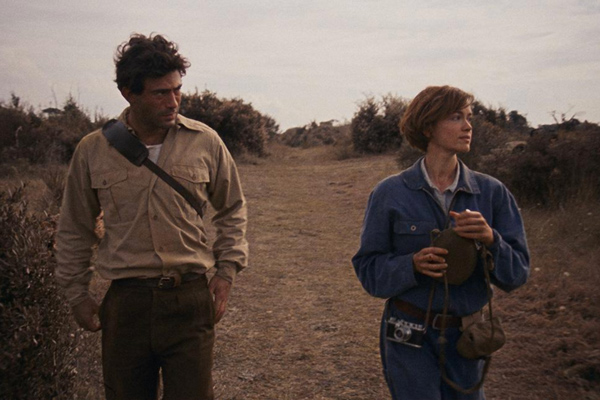
She remarks that she is looking for life … after seeing one corpse after another. Her Leica becomes an instrument of resistance. Leipzig followed by exile, then Paris moving towards the Spanish Civil War surface as fragments of a life still being lived, with past and present bleeding together.
Schüle brings luminosity to her understanding of Taro, while the ensemble cast of exiles, expats and ex-lovers in Aaron Altaras, Luna Wedler, Lucas Englander, Thomas Schubert and Sebastian Schneider make the politics and romance mixer feel youthful and energetic but mostly serve as footnote purposes. Cinematographer Manuel Alberto Claro adds stylized touches — including Super 8mm footage that approximates the grain and celluloid feel of period newsreels — but what proves more jarring is the film’s overuse of archival material, which at times undercuts the dynamism and immediacy of the acted sequences.
There are some lives that seem almost too perfectly calibrated for cinema: exile, politics, romance, art, war, and a premature death waiting at the end of the reel. The Girl with the Leica is ultimately a film about who gets to look, who gets remembered, and who gets written into the history contained inside a photograph — giving us something more than the footnote of history’s first female photojournalist to die on the battlefield, or simply the woman beside Robert Capa.
Reviewed on September 2nd at the 2026 Venice Film Festival (83rd edition) – Orizzonti (opening film). 118 Minutes.
★★½/☆☆☆☆☆