

Root Work: Taheri and Hadzija Disrupt the Symmetry
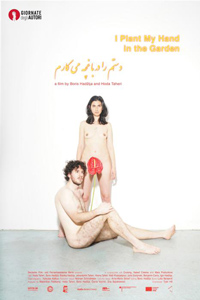 There’s an exceptional element of fluidity and ambiguity slyly operating within and then aggressively overwhelming I Plant My Hand in the Garden, the narrative debut of directors Hoda Taheri and Boris Hadžija, who are basically playing cyphers of themselves (and utilizing a few of their family members as cast members). Building on themes evident in their previous short films, both literally and metaphorically (motherhood and gardens seem to be prized motifs), their latest directly skewers notions of identity, and on national and interpersonal levels. A first clue in the schism between what this narrative appears to be ‘about’ versus what actually transpires is ostensibly announced by a title of metaphorical absurdity, suggesting an aggressive dominance in transplanting a manicured space in which one had no part in crafting, but also the innate inability of ever becoming a truly organic element to such surroundings.
Hoda has fled to Berlin from Iran, a refugee seeking asylum. She’s pregnant and about to marry Boris, who emigrated from Serbia. They’re both gay, but seemingly share a desire to build a family the old fashioned way, much to the delight of (at least) their mothers, who share their own memories of motherhood with their children. But, almost inexplicably, it seems this picture perfect scenario is not exactly what Hoda and Boris have in mind.
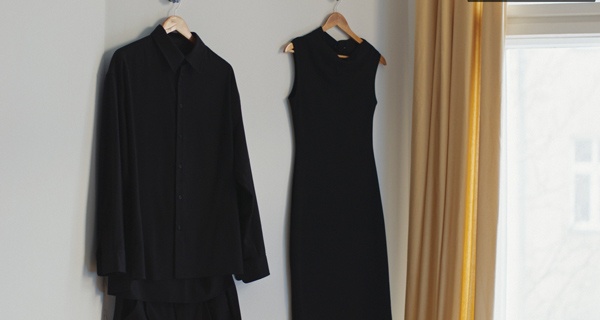
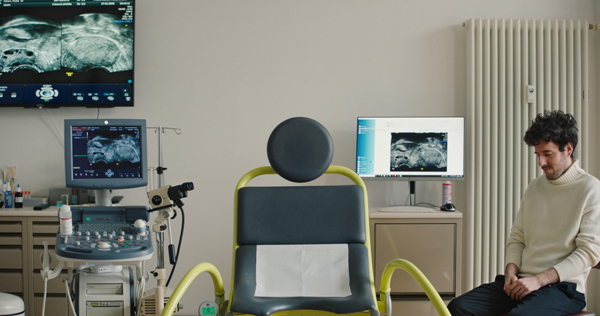
Despite its contemporary and cosmopolitan escapades, the narrative becomes as unresolvable as its title promises – who are these people, actually? What are they trying to do, other than successfully disrupting notions of ritual, identity, nationality? Perhaps, most intriguing, they do not know themselves, ending as it does in a graveyard as Hoda sheds a final prop on a bench, stating she no longer wants to play the current role, promising another rebirth or evolution. They’re kind of scruffy, artisanal con artists, milking the yolk of heterosexual bounties (as suggested by the return of a used wedding dress and collecting expensive gifts or money for their participation in the traditional aspects of marriage, pregnancy). But their experiences are also a reflection of ruptures and contradictions, hearkening back to something like William Blake’s formidable question “What immortal hand or eye, Could frame thy fearful symmetry?” The film’s most provocative moment arrives during a gynaecological exam from the visual perspective of a speculum exiting a vagina, made all the more meaningful by two women’s shared dreams regarding abortion. As Hoda comments, she’s at last arrived in a country where abortion is legal, but she herself is not. Inside or outside of a country or a body, the metaphorical and the literal are in a constant, queasy choreography.
To read descriptions of what I Plant My Hand in the Garden suggests it’s a film in the vein of Goran Stolevski’s Housekeeping for Beginners (2023), but this is not the blended queer oasis of chosen family one should be expecting. Curious exchanges of dialogue present a myriad of unresolved loose ends regarding citizenship, relationships, and the near future for absolutely everyone encountered. The film’s visualizations also keep us at a distance, as if we’re peering at these characters from afar, observing snatches of dialogue, intimate moments, embarrassing realities, or insidious designs. Often, we’re also engaged in a similar fracturing of focus, highlighting how everyone is in a juggling act of identity, such as the opening shot of Hoda as she sits in front of a mirror whilst conversing with her mother on a laptop. She exists in three spaces to the audience, yet our true position will always be at her back, wondering what exactly is going on in her mind. While it’s a film feeling quite human, as if it’s actually lived in, there’s a discomforting disquietude by the end credits – the only garden in which a hand can be planted is the graveyard.
Reviewed on September 5th at the 2026 Venice Film Festival (83rd edition) – Giornate degli Autori. 83 minutes.
★★★½/☆☆☆☆☆